




For most B.Tech students, the degree feels like the main target. From the first year itself, life starts revolving around semesters, exams, internal marks, and final results. Many students believe that if the degree is completed properly, a job will come automatically. This belief is very common and also very understandable. However, when students finally step into interviews or training programs, reality starts to feel different.
At Deepshikha College, we observe this situation every academic year. Some students with good marks struggle to clear interviews. At the same time, students with average results but stronger practical understanding and better behaviour often get selected earlier. This happens because companies today look for readiness, not just qualifications. They want people who can learn, adjust, and contribute in real work environments.
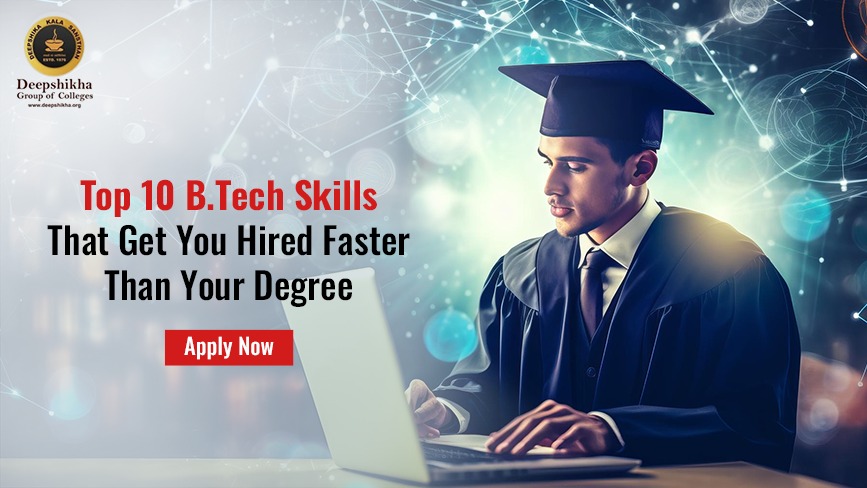
Degrees still matter, but skills often decide how fast a student gets hired and how well they grow later.
Why Skills Matter More Than Marks Today?
Industries change much faster than textbooks. Tools, machines, software, and work processes keep evolving. Because of this, companies cannot depend only on academic knowledge. They need people who can adapt and think on their feet.
Marks show effort in studies, but skills show how a student may perform at work. Employers try to understand how a student handles pressure, how they respond to problems, and how comfortable they feel working with others. This is where skills quietly start becoming more important than the degree itself.
The Ability to Think Through Problems
Engineering is not about following instructions every day. Real work involves unexpected situations. A system may stop working. A design may fail. A program may not behave the way it should.
Students who can pause, think, and try to understand the issue usually stand out. They stay calm in panic situation. They do not quit as soon as problem arrive. Instead they look for ways to resolve the issue and find an optimal solution. Employers value such employees in their organization because they know they can handle pressure without freezing.
Practical Understanding develops confidence
Many students knows the theory by heart but are not able to implement the same in practical situation. This leads to hesitation during their interviews. practical experience in any organization gives the students exposure and help them cover this gap. This makes them more confident and comfortable while applying what they know.
Students who spend their time in labs and workshops. feel more comfortable with real tasks. They have already seen systems before and faced small failures too. Due to this, real work does not feel completely foreign to them. Even basic hands-on experience makes learning feel real and useful.
Communication Skills
Communication is often misunderstood by many people. It is not about using hard vocabulary or speaking perfect English with one another. It is about expressing ideas clearly and listening properly to the person.
Engineers explain problems to teammates, update seniors, and sometimes interact with people outside their technical field. Students who practise clear communication during college usually feel more confident during interviews. Over time, good communication also supports leadership growth.
A Learning Mindset Matters More Than Perfection
No company expects fresh graduates to know everything. Employers know that learning continues on the job. What they look for is interest and openness.
Students who show curiosity and willingness to learn new tools usually adapt faster. They accept feedback without ego. They improve step by step. This mindset makes them easier to train and more valuable in the long run.
Comfort With Basic Tools and Systems
Engineering roles involve working with tools in one form or another. This could be software, machines with digital panels, or online systems for reporting and tracking work.
Students who are comfortable using basic tools related to their branch usually adjust faster in the workplace. They do not feel lost when introduced with new type of systems. Instead, they explore, they prefer to ask questions and learn gradually.
Working Well With Other People
Most engineering work happens in teams and here team work plays a big role. Rarely does one person handle everything on his own. Working on projects involve sharing tasks and responsibilities with one another.
Students who respect others and listens patiently often suits more in the professional teams. Employers value such behavior because teamwork improves productivity and reduces conflicts at work.
Managing Time and Responsibility
Work life comes with deadlines. Students who learn to manage time during college usually handle pressure better later.
Small habits eventually compounds over time. when students plan and complete their task on time. This shows discipline. These are the kind of habits teachers recognizes and they feel more confident in trusting such students with responsibility.
Internship and Project Experience
Internships give students a real look at how work is done on a daily basis. They get familiar with routines, systems, and workplace expectations instead of only imagining them.
Projects help show how students have used what they learned in class. Projects turns theory into practical and make learning more fun. Even small projects are useful in providing students with something practical to talk about. These kind of experiences also help them acknowledge which kind of work suits them better.
Professional Behaviour and Long-Term Growth
Technical skills can help a student get selected, but behaviour decides how far they go after joining. Always staying on time and treating others with respect leaves a remarkable impression.
Students who can acknowledge feedback from their teachers and who acts honestly usually earns trust of their teachers faster. Over time, this trust can play a big role in their career growth. Over time, this trust opens up much more opportunities than technical skills do.
Adjusting to Change
Work environments keep on changing and evolving. Roles evolve. Technology advances. Students who can adjust calmly usually move ahead faster.
Adaptability shows maturity to the employers. It shows that a student can handle real-life situations without losing focus. Employers value this quality because it reduces training effort and improves stability.
Conclusion
A B.Tech degree is important, but it does not decide everything. Skills shape confidence, performance, and long-term growth. Students who focus only on exams often realise later that something is missing.
At Deepshikha College, we encourage students to look beyond marks. When students build skills alongside academic learning, they feel more prepared for interviews and work life.
In the end, it is not only the degree that gets students hired. It is how well they think, learn, behave, and grow when real responsibility begins.


